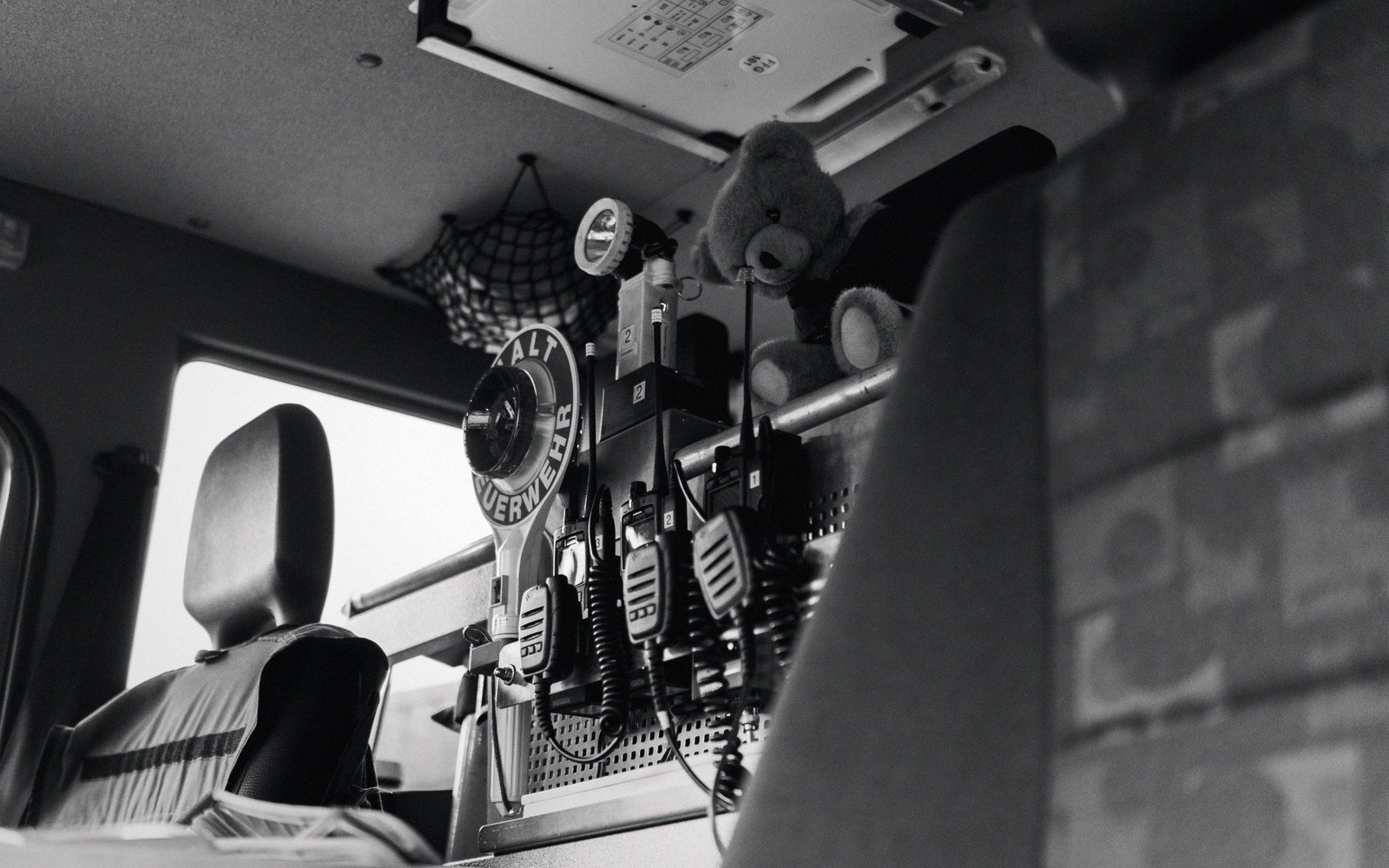
Commercial mobile networks are optimised for one thing above all else: throughput per unit of spectrum. More users, more video, more data — the engineering goal is squeezing the most bits through a given allocation of spectrum in a given geography. Coverage at the edge of a cell is a cost to be managed; congestion during a stadium event is a temporary embarrassment. The network is designed for the average case, and the average case is a commuter checking social media.
Critical communications networks start from a different premise. The user is a paramedic, a firefighter, a control-room dispatcher. The moment they most need the network is the moment when everything else is going wrong — a building is on fire, a flood has knocked out infrastructure, a major incident has drawn every emergency unit in a county to one postcode. That is not the average case; it is precisely the scenario a critical network must be engineered to serve.
This inversion touches every layer of the design. Where a commercial operator measures success in peak data rates, a critical network measures success in availability — the percentage of time the system can be reached, in the locations where it must work, by the users who depend on it. The target figures are correspondingly demanding: critical networks typically aim for availability measured in multiple nines, and coverage is expected to reach places a commercial network would never bother with: underground car parks, lift shafts, stairwells, tunnels, and the kind of rural terrain where a commercial return on a cell site is impossible to justify.
01Priority, Preemption and the Queue
Traffic management on a commercial network is largely about fairness — each subscriber gets a share. On a critical network, fairness is not the goal. Hierarchy is. When spectrum is contested, the system must guarantee that a senior incident commander can reach control even if every other user on the same cell is transmitting simultaneously.
This is achieved through priority and preemption. In a TETRA system — the digital trunked radio standard developed under ETSI and widely deployed for public-safety use across Europe and beyond — calls are assigned priority levels. A high-priority call can seize a channel that a lower-priority call is already occupying. The lower-priority user is bumped. That behaviour would be unacceptable in consumer wireless; in an emergency, it is the correct outcome.
4G and 5G networks standardised through 3GPP carry equivalent mechanisms. Mission Critical Push to Talk (MCPTT), Mission Critical Data (MCData) and Mission Critical Video (MCVideo) are all defined within 3GPP's standards and include QoS profiles, priority bearers and pre-emption flags precisely so that a broadband critical network can replicate the traffic discipline that TETRA users have relied on for decades. The channel may be fundamentally different — an LTE or NR air interface rather than a dedicated TETRA allocation — but the principle is the same: the most urgent traffic must get through regardless of what else is competing for resource.
Traffic management on a commercial network is largely about fairness — each subscriber gets a share.
From this piece
02Graceful Failure and the Fallback Chain
Perhaps the sharpest distinction between a commercial and a critical network is how each behaves when part of it breaks. A commercial network can tolerate a base station going offline; users in that cell lose service and the operator dispatches a repair team. That is an inconvenience. For a critical network, the same event during a major incident is potentially catastrophic — unless the system has already planned for it.
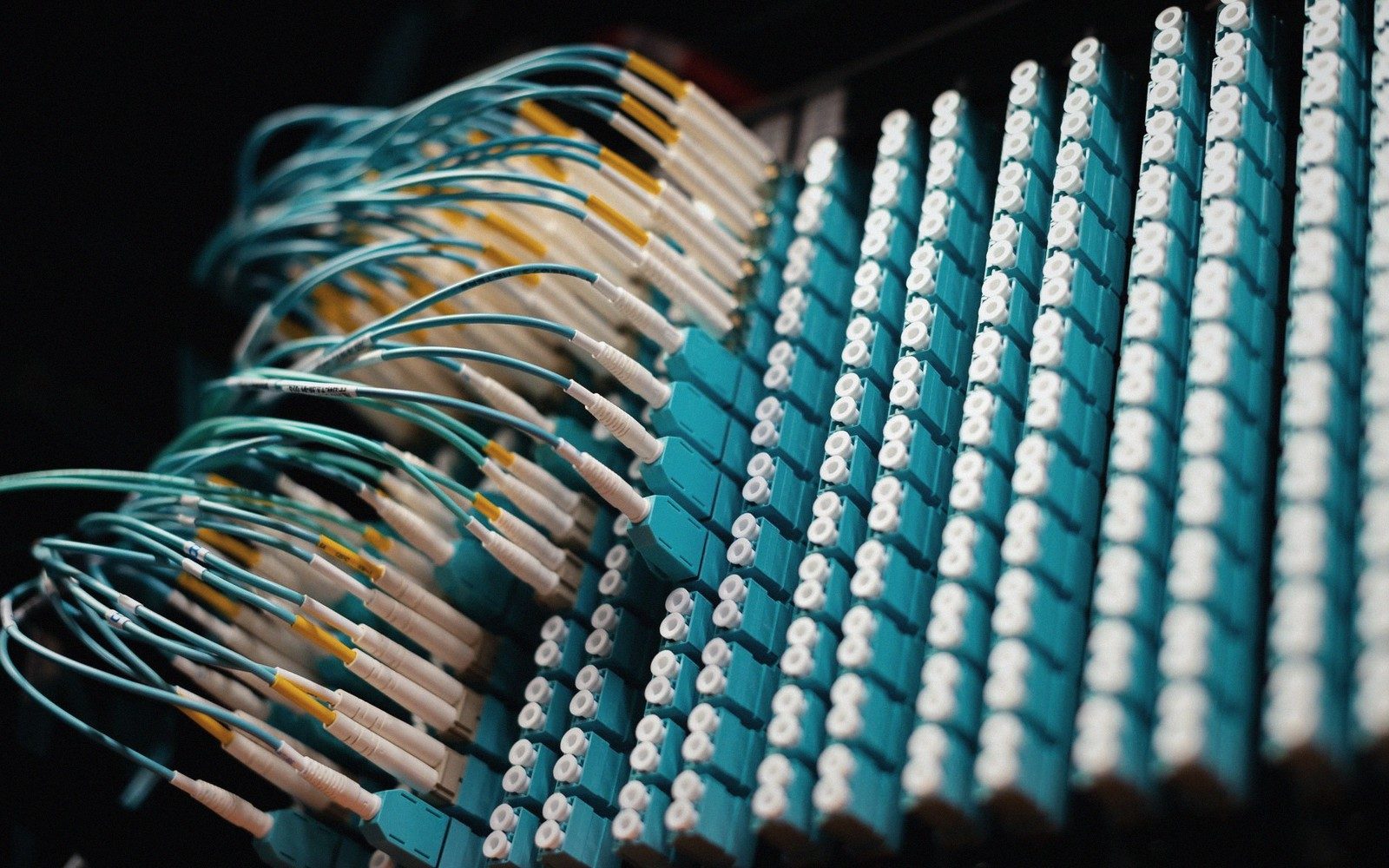
Critical network design therefore builds in an explicit fallback chain. At the infrastructure level, sites are hardened: battery backup and, on many sites, generator power are standard, not optional. Backhaul paths are often duplicated so that a single fibre cut does not isolate a site. Core network functions may be distributed or replicated so that no single node failure takes down the system.
Below infrastructure hardening sits a more subtle capability: the ability to keep working without the infrastructure at all. In TETRA and its peers, this is called Direct Mode Operation (DMO). Two terminals that can hear each other can communicate peer-to-peer, with no base station in the path. DMO does not require a working network; it requires only two radios with power. A firefighter inside a building where no signal penetrates can switch to direct mode and remain in contact with a colleague ten metres away. That conversation does not touch a cell, a core, or a backhaul link.
Broadband critical standards are building equivalent capability — device-to-device communication that operates when infrastructure is absent or overloaded. The principle is the same one that has lived in TETRA for decades: the network should degrade gracefully, and the terminal in the hand should remain useful even at the bottom of the fallback chain.
| Design question | Critical network | Consumer network |
|---|---|---|
| First priority | Coverage everywhere it is needed, including the edges nobody visits | Capacity where the users are |
| Voice model | One-to-many, pressed and released, set up in a fraction of a second | One-to-one, dialled, set up in seconds |
| Behaviour under load | Priority and pre-emption: the important call gets through | Fair sharing; everybody slows down together |
| When the network is gone | Terminals talk directly to each other | The device shows no service |
| Design case | The worst day of the year | The average busy hour |
03The Design Philosophy in Summary
None of this means critical networks ignore data rates or spectrum efficiency. Modern public-safety networks must carry high-definition video from body cameras, maps, and real-time database queries that analogue radio could never dream of. But those capabilities are built on a foundation — coverage, priority and resilience — that commercial networks are not required to provide and generally do not. The difference is not a matter of budget. It is a matter of purpose: a critical network exists specifically for the day when everything else fails, and it must be ready for exactly that day.
Two terminals that can hear each other can communicate peer-to-peer, with no base station in the path.
From this piece