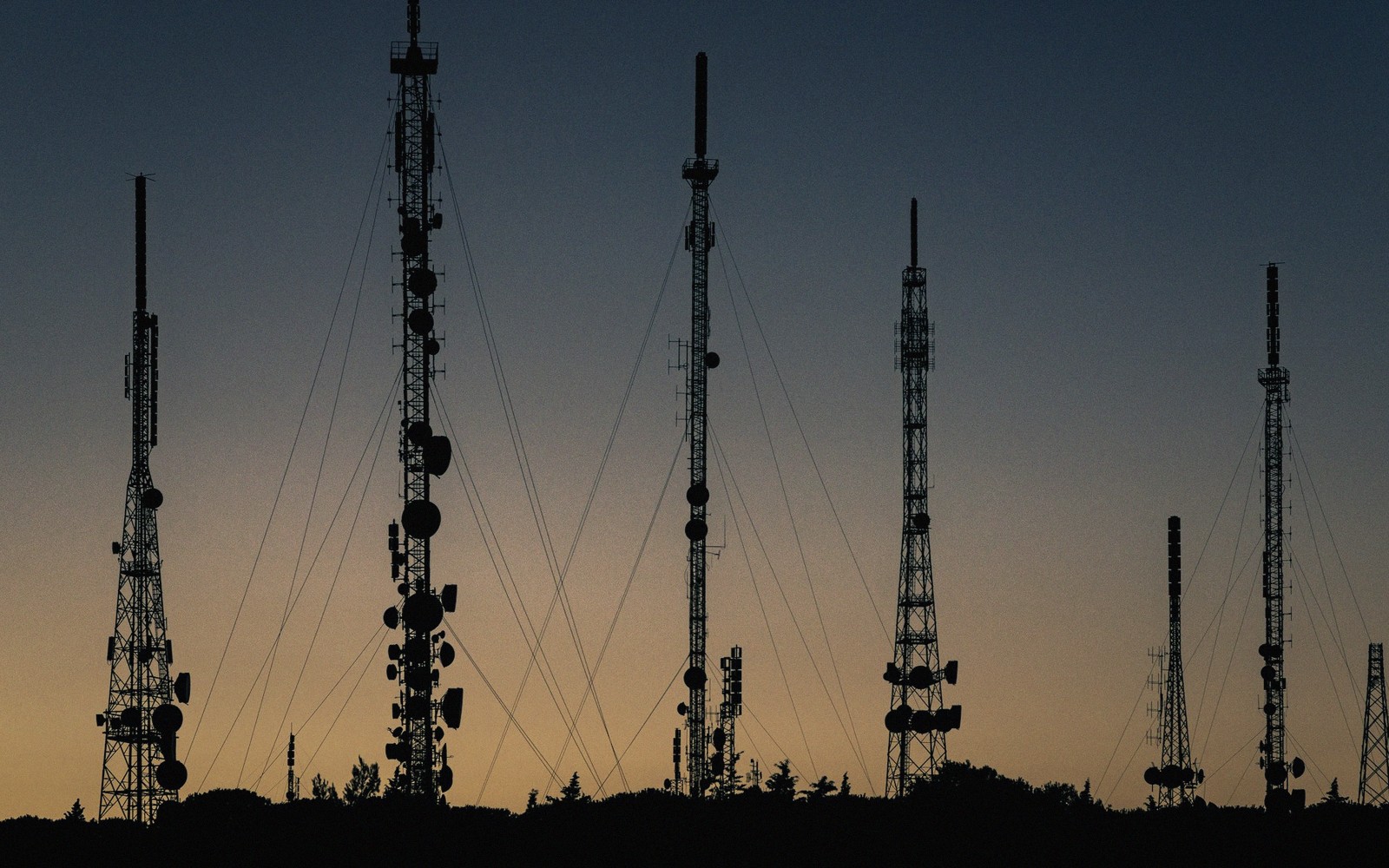
Wireless generations get marketed as a steady climb: more bars, faster downloads, lower latency. The engineering reality is less tidy and more interesting. Each generation did not simply speed up the previous one; several of them changed the fundamental model of what a cellular network is for and how it moves information. Understanding those shifts — not the headline figures, but the architectural breaks — is what makes sense of the system we have today.
The numbering started informally. Nobody launched 1G with a press release; the "first generation" label was applied retrospectively once 2G existed to contrast against. That pattern — each generation only becoming visible in hindsight — tells you something about how the technology actually develops. Standards bodies formalise what the engineering community has already started building.
011G to 2G: The Move from Analogue to Digital
First-generation networks were analogue. A voice call was a continuously varying electrical signal, frequency-modulated onto a carrier and transmitted through the air much as an FM radio broadcast is. The system was cellular — frequency reuse across a grid of cells — but everything above the physical layer was analogue in character. Systems like AMPS in North America and NMT in Scandinavia worked, but they shared three structural problems: inefficient use of spectrum, limited capacity, and essentially no privacy, since any scanner could receive the signal.
The move to 2G was a clean break, not an increment. The defining change was digitisation of the voice signal and modulation of that digital bitstream onto the carrier. GSM — developed under ETSI and the earlier CEPT coordination effort, and later maintained by 3GPP — encoded voice using a codec, then multiplexed calls using TDMA: several users sharing a single frequency channel by taking turns in tightly defined time slots. The competing cdmaOne standard used CDMA instead, spreading each call across a wide band and separating users by code rather than time, but the architectural objective was the same.
What digital encoding bought was compression, encryption and error correction. A GSM voice call could be ciphered before transmission; interference could be partially corrected in the receiver; more calls could fit into the same block of spectrum. Capacity roughly tripled compared to analogue systems in the same bandwidth. The side effect — familiar to anyone who used a mobile in the early nineties — was that degradation was no longer graceful: analogue grew hissy and crackled; digital worked cleanly until it simply stopped.
Capacity roughly tripled compared to analogue systems in the same bandwidth.
From this piece
Data in 2G was an afterthought bolted onto a voice architecture. GPRS, the packet extension sometimes called 2.5G, let multiple time slots be bundled together and assigned to data traffic on demand rather than dedicating a circuit for the duration of a session. Throughput was modest, but the conceptual step — bursty packet data sharing spectrum with voice — was important. It pointed directly at what came next.
022G to 3G: The Internet in the Pocket
Third-generation networks were the first ones designed with data as a primary traffic class rather than an add-on. The UMTS specification, standardised through 3GPP in its early releases, used wideband CDMA on the air interface and introduced a proper packet-switched domain running alongside the circuit-switched domain for voice. The radio channel was 5 MHz wide — substantially wider than GSM's 200 kHz — and the spreading gain of WCDMA allowed variable data rates allocated per user depending on channel quality and network load.
The real architectural news in 3G was the introduction of the RNC — Radio Network Controller — as a separate node sitting above the base station. The RNC handled handover decisions, power control and the radio resource management logic that in GSM had lived partly in the base station and partly in the core. This was a conscious choice to centralise intelligence, and it came with a cost: the backhaul requirement between base station and RNC became a capacity bottleneck as data rates rose.
HSPA — the High Speed Packet Access extensions introduced in later 3GPP releases — substantially increased practical throughput by moving scheduling down to the base station and reducing the round-trip time involved in retransmitting lost packets. A feature called HARQ let the receiver combine a failed packet with its retransmission rather than discarding and requesting a clean copy, recovering more information from the channel. By the end of the HSPA era, a well-placed handset could achieve downlink rates comfortably in the tens of megabits per second. The network was doing this not with wider channels but with smarter scheduling, higher-order modulation and adaptive coding — squeezing more bits per hertz out of the same physical resource.
For users, 3G meant the browser in the pocket became genuinely usable. For the network, it meant IP traffic overtook voice as the dominant load, a crossover that redefined what cellular infrastructure is fundamentally for.
033G to 4G: All-IP and the Erasure of the Circuit
LTE — Long Term Evolution, standardised by 3GPP beginning in Release 8 — completed the transition that 3G had started. The circuit-switched voice domain was gone. Everything, including voice calls (carried over VoLTE), became IP packets over a purely packet-switched core. This was not just tidiness; it changed the economics of the entire system.
The air interface shifted from CDMA to OFDMA — Orthogonal Frequency-Division Multiple Access — in which a wide channel is divided into many narrow subcarriers, each modulated independently. Users are assigned subsets of subcarriers across both frequency and time, a two-dimensional resource grid that lets the scheduler exploit which parts of the spectrum are momentarily favourable for each user. Paired with MIMO — multiple transmit and receive antennas working together to multiply spectral efficiency — OFDMA delivered a step change in bits per hertz that HSPA extensions to WCDMA could not match.
The network architecture changed as well. The RNC disappeared. Its functions were distributed: radio resource management moved into the base station (now called eNodeB), and mobility management moved into a much flatter core — the EPC, Evolved Packet Core — built around IP from the ground up. Removing the RNC reduced latency and removed a central point of congestion, at the cost of requiring the base stations themselves to coordinate with each other for handover.
Latency dropped dramatically. Where GPRS round-trip times were measured in hundreds of milliseconds and 3G in the tens, LTE's user-plane latency fell to single-digit milliseconds under good conditions. That shift opened applications — video calling, real-time gaming, responsive cloud services — that had been marginal on earlier networks. Lower latency is not just a comfort; below certain thresholds, entire application categories become viable that were not before.
044G to 5G: Architecture as a Variable
Fifth-generation NR — New Radio, the 3GPP air interface — continued the OFDMA approach but parameterised it. Earlier generations had fixed numerology: a set subcarrier spacing, a fixed slot duration, a single carrier bandwidth. NR introduced scalable numerology: subcarrier spacing can be 15, 30, 60, 120 or 240 kHz, with corresponding slot durations that halve as spacing doubles. A deployment in low-band spectrum for wide-area coverage uses narrow subcarrier spacing and long slots; a millimetre-wave deployment for high-capacity indoor use uses wide spacing and very short slots. The same specification serves both without redesign.
More significant than the air interface changes, however, was the rearchitecting of the core. The 5G core — 5GC, specified in 3GPP Release 15 and refined since — abandoned the monolithic network functions of the EPC in favour of a service-based architecture. Network functions expose APIs; they can be instantiated as software, moved between hardware, scaled horizontally. The network slice concept allows logically separate networks — with different latency, reliability and security characteristics — to run on shared physical infrastructure. A public safety broadband deployment can coexist on the same radio equipment as a consumer network while maintaining priority, isolation and the quality-of-service guarantees that critical communications require.
Standalone 5G — with the 5GC fully deployed — is architecturally unlike anything that preceded it. Non-standalone 5G, which reused the LTE core to accelerate early deployment, was essentially a faster 4G. The distinction matters: most of the headline capability of 5G depends on the core, not just the radio.
- 1G · analogue cellularVoice modulated straight onto a carrier, one call per channel, with the network handling handover between cells.
- 2G · digital voice and messagingSpeech digitised and coded, several calls sharing a carrier, encryption possible, short messages arriving as a side effect of signalling.
- 3G · packet data as a first-class citizenWider carriers and a radio designed around bursty packet traffic rather than a continuous call.
- 4G · all-IP, broadband to the handsetThe circuit-switched path removed entirely; voice becomes packets like everything else, scheduled on orthogonal subcarriers.
- 5G · configurable radio, separated servicesVariable subcarrier spacing, much wider bandwidths, an optional millimetre-wave mode and a core that can keep services apart on one network.
Ordered by generation, not by year — deployment dates differ by country and are deliberately absent here.
05What the Pattern Shows
Each generational break carried a signature. 1G to 2G: analogue to digital, voice made robust and efficient. 2G to 3G: data elevated from afterthought to primary traffic, higher throughput through wideband CDMA. 3G to 4G: circuit switching eliminated, flat all-IP architecture, OFDMA air interface, latency reduced to unlock new application classes. 4G to 5G: flexible numerology, software-defined core, network slicing, and the architectural preconditions for use cases far outside consumer broadband.
More significant than the air interface changes, however, was the rearchitecting of the core.
From this piece
The marketing framing — generation as speed grade — misses the structural point. Speed improved in every transition, yes, but the deeper changes were in what the network is: its switching model, its protocol architecture, its relationship to the application layer above it. Each generation inherited intractable constraints from its predecessor's design choices, hit them, and responded with something architecturally new. The next set of constraints is already accumulating.